Meme coin versus regulated crypto
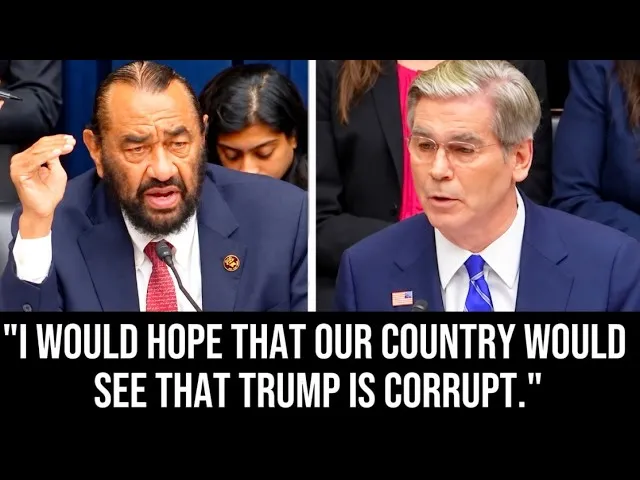
Video: WHOA: Al Green GRILLS Bessent over Trump's meme coin “scam”
Want articles like this for your own video to promote it on YouTube and Google? Order them through the Telegram bot @sat_sit_bot. It writes articles around your video, embeds the video and publishes them on popular niche websites (no ads). Free trial — 50 articles.
A meme coin is a speculative token with no cash flow, no governance rights and no disclosure duty, while regulated crypto exposure such as registered funds or licensed exchange products comes with audits, custody rules and reporting. For a retail investor, the regulated route is better for capital preservation; the meme coin route is a lottery ticket, and the Senate exchange over the Trump token shows exactly why the difference matters.
What the Al Green and Scott Bessent exchange actually established
Senator Al Green used a Senate hearing to force Treasury Secretary Scott Bessent to answer for a token launched under the Trump name, and the core of the clash was not the token's price but who is accountable when the issuer sits in office. Green framed the launch as a scam built on the credibility of the presidency; Bessent's defense rested on two pillars — that a president is entitled to private business activity and that he personally has no role in the coin. The exchange matters because it moved a market argument into a governance argument: a token whose main selling point is a famous name is, by design, a product whose value depends on the behavior of the person named.
Why a meme coin is not the same asset class as regulated crypto
The two are separated by disclosure, custody and legal recourse, and those three differences decide who eats the loss when the price collapses. Registered securities must publish financials, insiders must file transactions, and exchanges must segregate client assets; a meme coin typically publishes nothing beyond a smart contract and a website.
- Disclosure. A listed company files quarterly results and insider sales. A meme coin's wallet distribution is visible on-chain but rarely explained, and large pre-loaded allocations are common.
- Custody. Regulated crypto products hold assets with qualified custodians and publish attestations. Meme coin buyers usually self-custody or leave tokens on a thin exchange with no insurance.
- Recourse. A securities buyer can sue over misstatements. A token buyer has almost no path to recovery if the price falls 90%.
- Liquidity. Meme coin pools are shallow; a single large seller can move the price double digits, which is why exit liquidity, not technology, is the real risk.
The conflict-of-interest problem nobody can regulate away
When the issuer's name is the product, every official act becomes a potential price signal, and that is the argument Green pushed in the hearing. A sitting officeholder who profits from a token sold to the public creates a channel where policy announcements, meetings and even social media posts can move a market the officeholder benefits from. Bessent's answer — that private business is permitted and he is not involved — addresses legality, not the incentive. Traditional finance solves this with blind trusts, divestment deadlines and recusal rules; a token held in a wallet has no equivalent mechanism, because the wallet is the disclosure.
How retail buyers actually lose money on meme coins
The losses come from timing and supply structure, not from bad luck, and the pattern repeats across almost every launch. Early wallets accumulate at negligible cost, the public buys the narrative at a higher price, and the early allocation is sold into that demand. Typical warning signs:
- A small number of wallets hold a large share of supply, visible on any block explorer.
- Liquidity is unlocked or controlled by a single address.
- Trading volume spikes coincide with wallet outflows from the deployer.
- The token's only narrative is a personality, a slogan or an election.
Buying after the first vertical candle means buying the exit liquidity of people who were earlier in the queue. The comment sections under coverage of the hearing reflect this bluntly: many viewers describe the buyers as willing participants who ignored the obvious structure, and others point out that some purchases are made for access or influence rather than for return.
Common doubts from viewers and what the record shows
Viewers of the hearing coverage raised the same questions retail investors ask in every cycle, and most have factual answers. The recurring themes are whether the token is legally a scam, whether the president personally sells, whether any meme coin can be legitimate, and whether crypto as a whole is the same thing. On the first: "scam" in political speech is not a legal finding, and no court has ruled on the Trump token's status. On the second: the issuer's involvement is a governance question, not a settled fact, which is precisely why disclosure rules exist. On the third: a meme coin can be transparent and still be a bad investment, because transparency does not create cash flow. On the fourth: conflating bitcoin with a personality token is a category error, since the former has no issuer and the latter has one.
What a sensible allocation looks like if you still want exposure
Treat meme coins as entertainment spending with a hard cap, and treat regulated crypto as the portfolio position. A workable framework:
- Cap speculative token exposure at a small single-digit percentage of investable assets and assume it can go to zero.
- Check holder concentration and liquidity locks before any purchase, not after.
- Prefer venues with published custody and audit arrangements for the core crypto allocation.
- Write down the exit price in advance; the failure mode is holding through a drawdown hoping for a second wave.
- Ignore anyone whose argument is that a famous name guarantees demand — the hearing demonstrated the opposite risk.
Conclusion
The Trump meme coin dispute between Al Green and Scott Bessent is less about one token than about the boundary between a private business and a public office, and that boundary is what separates a regulated crypto product from a personality-driven bet. Regulated exposure offers disclosure, custody and recourse; a meme coin offers a narrative and a queue. Buyers who understand the supply structure can still choose the speculative route, but they should do it with money they can lose and with the exit planned before the entry. Daniel Reed's breakdown of the hearing is a useful record of how the argument was framed on both sides.
FAQ
Is the Trump meme coin legally a scam?
No court has ruled it a scam, and "scam" in a Senate hearing is political characterization rather than a legal finding. What is documented is the structure: a token whose value depends on a name, with concentrated early holdings and no disclosure obligations. The legal question of whether it constitutes an unregistered security remains open.
Did Treasury Secretary Bessent admit involvement in the token?
Bessent's position in the exchange was that a president may conduct private business and that he himself is not involved in the project. That answers the personal-involvement question but does not address the conflict-of-interest concern Green raised. The distinction between legality and incentive is the heart of the dispute.
Can a meme coin ever be a legitimate investment?
A meme coin can be transparent and still be a poor investment, because transparency does not create cash flow or governance rights. Legitimacy in the legal sense depends on how it is issued and sold; legitimacy as an investment depends on whether someone will pay more later. Treat it as speculation with a defined loss limit, not as a portfolio holding.
Is all crypto the same as a meme coin?
No. Bitcoin has no issuer and no central allocation, and regulated crypto products carry custody and reporting requirements that personality tokens do not. The category error is common in public debate, but the risk profiles are fundamentally different. Judge each asset by its issuer, its disclosure and its supply structure.
Key takeaways
- Senator Al Green pressed Treasury Secretary Scott Bessent over the Trump meme coin, calling it a scam during a Senate hearing.
- Bessent defended the token by pointing to the president's right to launch a private business and insisting he is not involved in the project.
- Green argued that an officeholder profiting from a token sold to the public creates a conflict of interest that traditional securities rules would not allow.
- Meme coins carry no cash flow, no governance rights and no disclosure obligations, unlike registered securities or regulated exchange-traded crypto products.
- Most retail losses in meme coins come from late entry after insider and early-wallet selling, not from the underlying technology.
Source: WHOA: Al Green GRILLS Bessent over Trump's meme coin “scam” · Markdown version